
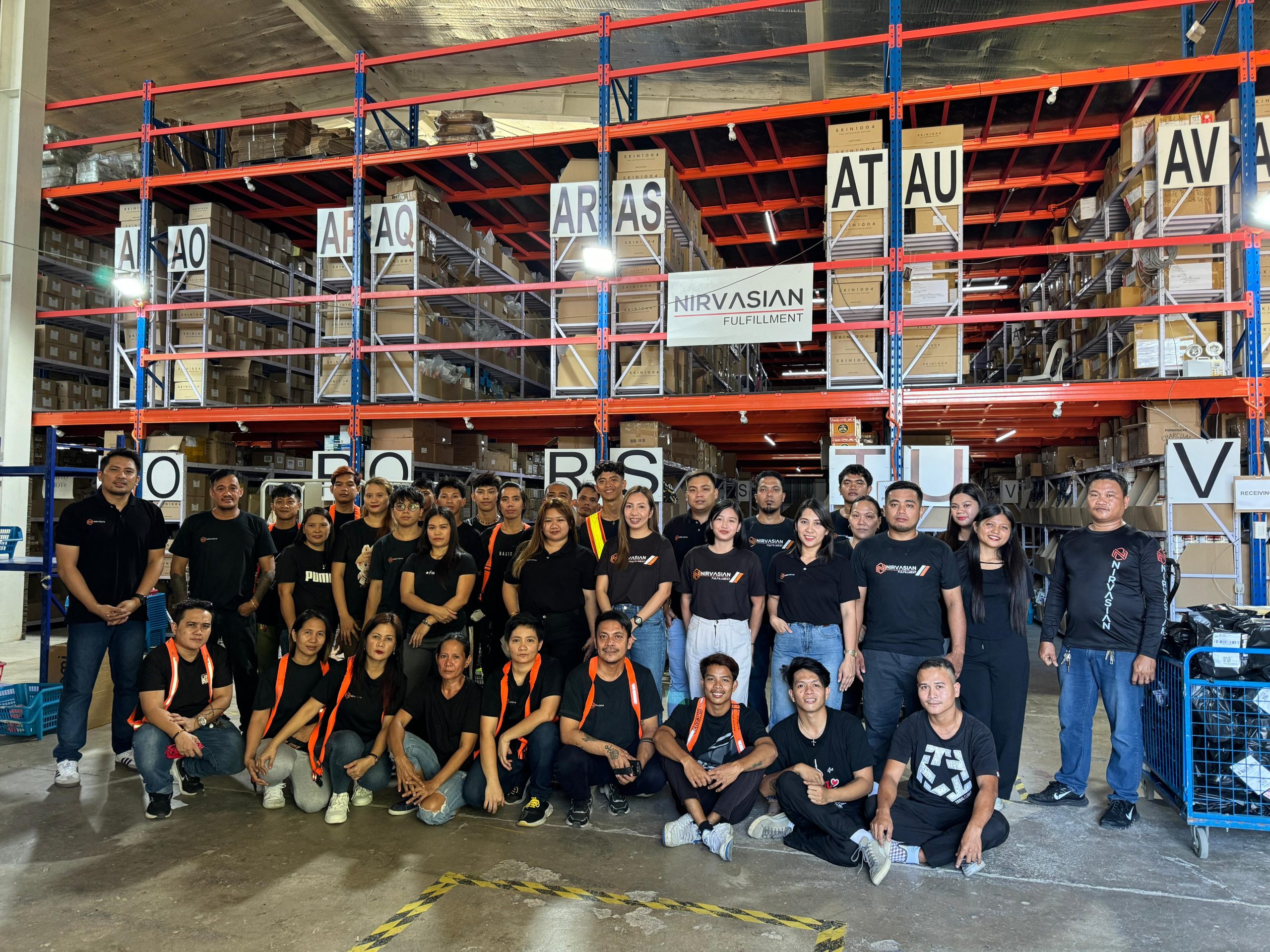
Short answer: To sell cosmetics in the Philippines, you need a Philippine company with an FDA License to Operate (LTO), an FDA cosmetic notification for every product before it goes on sale, and a warehouse that can store and ship beauty products the right way. Nirvasian Fulfillment Center Philippines handles all of it in one place for local and foreign brands: FDA filing, importation, storage, order fulfillment, cash on delivery and returns. Foreign brands do not need to open a Philippine company, because we can import and sell your products under our own licenses.
This guide is for skincare, makeup, hair care and personal care brands that want to sell in the Philippines through Shopee, Lazada, TikTok Shop, their own Shopify or WooCommerce store, or retail partners. It follows the order things actually happen: compliance first, then import, then storage, then orders.
Step 1: Get your FDA paperwork in place before you ship anything
Cosmetics are regulated by the Philippine Food and Drug Administration (FDA). The Philippines follows the ASEAN Cosmetic Directive, so instead of a full product registration, cosmetics go through a cosmetic product notification. Many sellers still call it “FDA registration” or “CPR”, but for cosmetics the document you need is the notification.
The License to Operate comes first
Only a company based in the Philippines that holds an FDA License to Operate can notify cosmetic products. The LTO is issued for a specific activity, for example cosmetic manufacturer, trader or distributor (importer, exporter or wholesaler). The company also needs a qualified person on record, usually a licensed pharmacist, chemist or chemical engineer.
If you are a foreign brand with no Philippine entity, you do not have to set one up. Nirvasian can act as your licensed importer and distributor: we hold the License to Operate, file the notifications for your products, import the stock and take care of the duties and taxes. Brands that prefer their own local company can still go that route, and we can help with the filing.
Then one notification per product
Every product has to be notified with the FDA before it is placed on the market. The application is filed online through the FDA ePortal. For each product you will typically need:
- A certificate of manufacture or a Good Manufacturing Practice (GMP) certificate from the factory
- The full ingredient list with the percentage of each ingredient
- Final label artwork for every pack size
- Clear photos of the product in its final retail packaging
- Proof for any special claims on the label, if you make them
- A certificate of origin, where applicable
The company that holds the notification must also keep a Product Information File (PIF) for each product, with quality and safety data, ready to show the FDA if asked.
If you prefer to hand it off, see our FDA registration service.
Check your labels and formula early
Two things delay launches more than anything else: labels that miss required details, and ingredients that are banned or over the allowed limit under the ASEAN rules. Philippine labels for cosmetics need the product name and function, directions for use, full ingredient list, country of manufacture, name and address of the company responsible in the Philippines, net content, batch number, manufacturing or expiry date, and any warnings. Fix these before you order packaging, not after the stock lands in Manila.
The FDA regularly warns the public about unnotified beauty products, especially whitening creams found to contain mercury. Marketplaces can take down listings that the FDA flags, so selling without a notification puts your store at risk, not only the product.
Step 2: Import your stock into the Philippines
Once the paperwork is ready, the stock can move. A few points that matter for beauty products:
- The importer must match the license. The company importing the goods should be the LTO holder, or a partner authorized to import them. Shipments of regulated products can be held at customs if the documents do not line up.
- Duties and VAT. Imports pay customs duty based on the product’s tariff code, plus 12% VAT. Products made in an ASEAN country may qualify for reduced or zero duty with a valid certificate of origin.
- Air or sea. Many brands send a small first batch by air to start selling quickly, then switch to sea freight for regular restocks, which costs far less per unit.
- Packing for the trip. Liquids and creams should be packed to survive heat and handling in transit. Ask your factory for sealed caps and sturdy outer cartons.
Nirvasian arranges air and sea freight and customs clearance into the Philippines. See our importation and bulk shipping service.
Step 3: Store beauty products the right way
Storage is where a lot of cosmetic brands lose money without noticing. The Philippines is hot and humid for most of the year, and that affects creams, serums, oils, lipsticks and anything with natural ingredients. Here is what to look for in a warehouse for cosmetics:
- Temperature options. If your label says “store below 25°C” or “store below 30°C”, the warehouse has to respect that. Ask whether they offer temperature-controlled or cold-chain storage for sensitive items, not only standard ambient racks.
- Lot and expiry tracking. Every batch number and expiry date should be recorded when stock arrives. If there is ever a complaint or a recall, you need to know exactly which customers received which batch.
- FEFO picking. First expired, first out means the units closest to expiry ship first. Without it, you end up with expired stock at the back of the shelf and customers receiving products with short shelf life.
- Clean, closed storage. Products should sit off the floor, away from dust, pests and direct sun.
- Separate area for damaged and returned goods, so opened or dented items never get mixed back into sellable stock.
At Nirvasian we store goods in ambient and cold-chain facilities, track every lot, and pick by FIFO or FEFO rules.
Step 4: Pick, pack and ship every order
Beauty customers judge the brand the moment they open the parcel. A leaking bottle or a broken compact usually means a bad review and a refund. Good fulfillment for cosmetics includes:
- Leak-proof packing. Pumps and caps taped or sealed, liquids in a sealed bag, glass bottles in bubble wrap.
- Branded touches. Inserts, thank-you cards, free samples and gift wrapping for promos.
- Kitting and bundles. Gift sets, regimen kits and “buy 2 get 1” bundles packed to order or pre-assembled before a campaign.
- Stock synced across channels. If you sell on Shopee, Lazada, TikTok Shop and your own site, the stock count must update everywhere at once. Otherwise you oversell during a flash sale and cancel orders, which hurts your shop rating.
- Ready for sale days. Double-date sales like 9.9, 10.10, 11.11 and 12.12 can multiply your daily orders. Your fulfillment partner should plan extra staff and stock with you in advance.
Nirvasian connects with Shopee, Lazada, TikTok Shop, Shopify and WooCommerce, processes orders the same day they come in before the daily cut-off, and ships nationwide through partner couriers such as J&T Express, Ninja Van and LBC. Learn more about our fulfillment services.
Cash on delivery is still a big part of the market
Many Filipino shoppers prefer to pay cash on delivery (COD), especially for a brand they are buying from for the first time. COD brings more orders, but also more parcels returned to sender when buyers are not home or change their mind. Order confirmation before shipping and fast COD remittance make a real difference to your cash flow. See our COD solutions for how we handle this, including remittance to bank accounts outside the Philippines.
Step 5: Handle returns and expiring stock
Returns are part of selling online. For cosmetics, every returned item should be checked before it goes back on the shelf:
- Sealed and undamaged items can be restocked under the same batch number.
- Opened, used or damaged items go to a separate area and are written off or sent back to you.
- Stock that is close to expiry should be flagged early so you can run a promo or bundle it, instead of throwing it away later.
Launch checklist for beauty brands entering the Philippines
| Task | When | Nirvasian can help |
|---|---|---|
| Decide who holds the LTO (Nirvasian’s license or your own local company) | First | Yes, we can use our license |
| Check formulas against ASEAN ingredient rules | Before printing labels | Yes, document review |
| Finalize Philippine-compliant labels | Before production | Yes, label review |
| File cosmetic product notifications on the FDA ePortal | Before shipping stock | Yes, full filing |
| Book freight and customs clearance | Once notifications are approved | Yes, air and sea |
| Receive, count and store stock with lot and expiry data | On arrival | Yes |
| Connect your stores (Shopee, Lazada, TikTok Shop, Shopify) | Before launch | Yes |
| Ship orders, collect COD, process returns | Every day | Yes |
Why use one partner for FDA, storage and fulfillment
Most brands start with three or four different suppliers: an FDA consultant, a freight forwarder, a warehouse and a courier account. It works, but every handoff is a chance for something to slip. The label approved by the FDA does not match the batch that arrived. The forwarder does not know the warehouse opening hours. Nobody owns the problem when a shipment is held.
When one team handles the whole chain, the documents, the stock and the orders all line up. That is the reason we built Nirvasian as an ecommerce fulfillment center in the Philippines that also does importation and FDA registration, rather than a warehouse only.
Frequently asked questions
Do I need FDA approval to sell skincare on Shopee, Lazada or TikTok Shop?
Yes. Cosmetics sold in the Philippines must be notified with the FDA, no matter which sales channel you use. Marketplaces can ask for proof and can remove listings that the FDA flags.
Can a foreign beauty brand sell in the Philippines without a local company?
Yes. The FDA notification has to be filed by a Philippine company with a License to Operate, and Nirvasian can be that company for you. We import and sell your products under our licenses, file the FDA notifications and handle customs, duties and taxes, so you can start selling without opening a local entity.
How long does it take to launch?
If you already have an LTO, most cosmetic notifications we file are approved in about 3 to 8 weeks. If you are starting from zero, plan extra time for the LTO and company setup. Importing and receiving stock usually takes a few more weeks depending on air or sea freight.
Can you store products that need to stay cool?
Yes. Nirvasian offers both ambient and cold-chain storage, with lot tracking and FEFO picking for products with expiry dates.
Is there a minimum order volume or a lock-in contract?
No. Nirvasian works without lock-in contracts or minimums to get started, so new brands can launch with a small first batch and grow from there.
Talk to us about your beauty brand
Tell us what you sell, where it is made and which channels you want to sell on. We will reply with a clear plan and an all-inclusive quote for FDA, importation, storage and fulfillment. Message us on WhatsApp at +63 919 080 5147, email info@nirvasian.com, or use our contact form.