
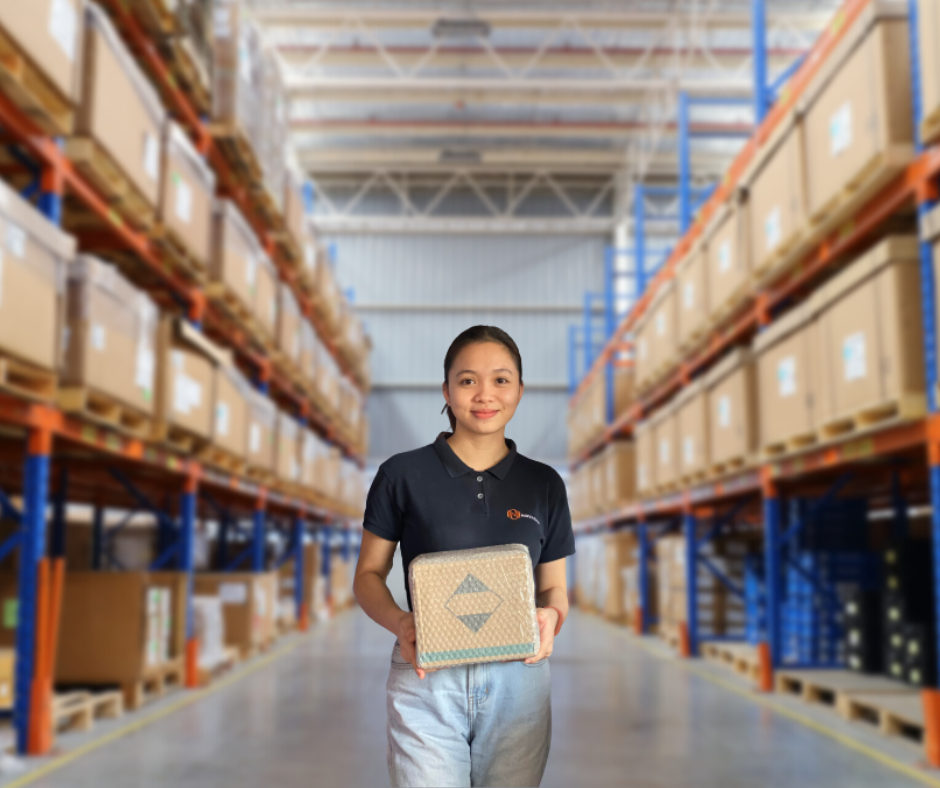
Short answer: Ecommerce brands in the Philippines usually get better value from a shared warehousing service than from leasing their own warehouse. You pay only for the space your stock uses, and the provider supplies the staff, racks, security and inventory system. For products like cosmetics, supplements and food, look for temperature-controlled storage, batch and expiry tracking, and real-time stock data. Nirvasian offers this kind of warehousing together with order fulfillment in Metro Manila.
This guide covers the types of warehousing available in the Philippines, how storage is priced, what to check for sensitive products, and how to keep storage costs under control.
Leasing a warehouse vs using a warehousing service
| Leasing your own warehouse | Shared warehousing service (3PL) | |
|---|---|---|
| What you pay for | The whole space, every month, used or not | Only the space and services you use |
| Contract | Usually a multi-year lease with deposits | Flexible, often month to month |
| Staff | You hire, train and manage them | Included |
| Racks, forklifts, security | You buy and maintain them | Included |
| Inventory system | You set it up | Included, with a dashboard |
| Best for | Large, stable volumes with your own logistics team | Growing ecommerce brands and foreign brands entering the market |
Leasing can make sense once your volumes are large and steady. For most online sellers, especially in the first years, a warehousing service turns a big fixed cost into a variable one that grows with your sales.
Types of storage you will find
- Pallet racking: for bulk stock in full cartons on pallets. Usually the cheapest way to store large quantities.
- Shelving and bins: for small items and brands with many SKUs, where staff pick single units for online orders.
- Ambient storage: standard indoor storage at room temperature, fine for most dry goods, clothing, gadgets and home products.
- Temperature-controlled and cold-chain storage: for products that must stay below a set temperature, such as some cosmetics, supplements, food and pharmaceutical items.
Why climate matters when you store products in the Philippines
The Philippines is hot and humid for most of the year, with a rainy and typhoon season that usually runs from around June to November. This affects stored goods in a few ways:
- Creams, serums, lipsticks and oils can separate, melt or change texture in high heat.
- Humidity can damage cartons, labels and paper packaging, and attract mold.
- Heavy rain and flooding are a risk in some areas, so goods should always sit on pallets or racks, never directly on the floor.
Before you choose a warehouse, check where it is, how the building is protected from water, and what temperature your products will actually sit at during the hottest months.
Inventory control: what a good warehouse should track
- Every SKU by barcode, scanned on receiving, picking and packing to avoid wrong items in orders.
- Batch or lot numbers and expiry dates for anything with a shelf life, so you can trace a batch if there is a complaint or recall.
- FIFO or FEFO picking: first in, first out, or first expired, first out, so older stock leaves first and nothing expires on the shelf.
- Regular cycle counts to catch differences early instead of once a year.
- Real-time stock levels synced with your Shopee, Lazada, TikTok Shop and Shopify stores, so you never sell what you do not have.
- Low-stock alerts so you can reorder before you run out, especially before big sale days.
Products that need extra care
Cosmetics and skincare
Beauty products need batch and expiry tracking, FEFO picking and, for many items, cooler storage than a standard warehouse. They also need an FDA cosmetic notification before they can be sold. See our guide on selling cosmetics in the Philippines.
Food and food supplements
These are also regulated by the FDA and have strict expiry and storage conditions. Keep them away from chemicals and strong-smelling goods.
Fragile and glass items
Glass bottles, ceramics and electronics need careful handling and the right packaging materials at the packing stage.
High-value items
Ask how high-value stock is secured, who can access it and how it is counted.
How storage is priced
Warehousing services in the Philippines usually charge storage in one of these ways:
- Per pallet per month, common for bulk stock
- Per shelf or bin per month, common for small items picked one by one
- Per cubic meter per month, based on the actual volume of your stock
On top of storage, expect fees for receiving stock, and for pick and pack if the provider also ships your orders. Temperature-controlled storage costs more than ambient storage, so only put products there that really need it.
How to keep storage costs down
- Do not overstock. Keep two to three months of stock in the Philippines and reorder based on real sales.
- Clear slow movers. Bundle them, discount them or ship them back before they pile up storage fees.
- Use the right storage type. Bulk stock on pallets, fast movers on shelves near the packing area.
- Plan for sale days. Bring extra stock in a few weeks before 11.11 or 12.12, not months before.
- Watch expiry dates. Expired stock is the most expensive stock you will ever store.
Checklist: choosing warehousing services in the Philippines
- Is the warehouse close to Metro Manila courier hubs and ports?
- Is it protected against flooding, with goods kept off the floor?
- Does it offer temperature-controlled storage for sensitive products?
- Does it track batches, expiry dates and pick by FEFO?
- Can you see your stock online in real time?
- Does it connect to your sales channels?
- Can it also pick, pack and ship your orders, and handle returns?
- Is pricing clear, with no lock-in?
- Can it handle import, customs and FDA if you bring goods from abroad?
Warehousing at Nirvasian
Nirvasian combines warehousing and fulfillment for ecommerce brands selling in the Philippines:
- Ambient and cold-chain storage
- Lot tracking, FIFO and FEFO picking
- A cloud warehouse management system synced with Shopee, Lazada, TikTok Shop, Shopify and WooCommerce
- Same-day pick, pack and ship, with returns scanned back into stock
- B2B and wholesale distribution to retailers
- Importation, customs clearance and FDA registration if you are bringing products into the country, including importing under our licenses for foreign brands
- No lock-in contracts or minimums
Learn more about our fulfillment and warehousing services, or read our guide on how to choose a fulfillment center in the Philippines.
Frequently asked questions
Can I rent warehouse space in the Philippines without a long lease?
Yes. A warehousing service lets you pay monthly for the space you use, without a multi-year lease or deposit.
Do you store products that need cold storage?
Yes. Nirvasian offers cold-chain storage in addition to ambient storage.
Can a foreign company store goods in a Philippine warehouse?
Yes. Foreign brands can keep stock in a Philippine warehouse and have orders shipped locally. The goods still need to be imported properly, and regulated products need FDA approval. Nirvasian can import the goods under its own licenses and handle the duties, taxes and FDA filing for you.
What is the difference between warehousing and fulfillment?
Warehousing is storing your goods. Fulfillment is everything that happens when an order comes in: picking, packing, shipping and returns. Most ecommerce brands need both, ideally from the same provider.
Talk to us
Tell us what you sell and roughly how much stock you plan to keep, and we will suggest the right storage setup and send you a quote. Message us on WhatsApp at +63 919 080 5147, email info@nirvasian.com or use our contact form.