
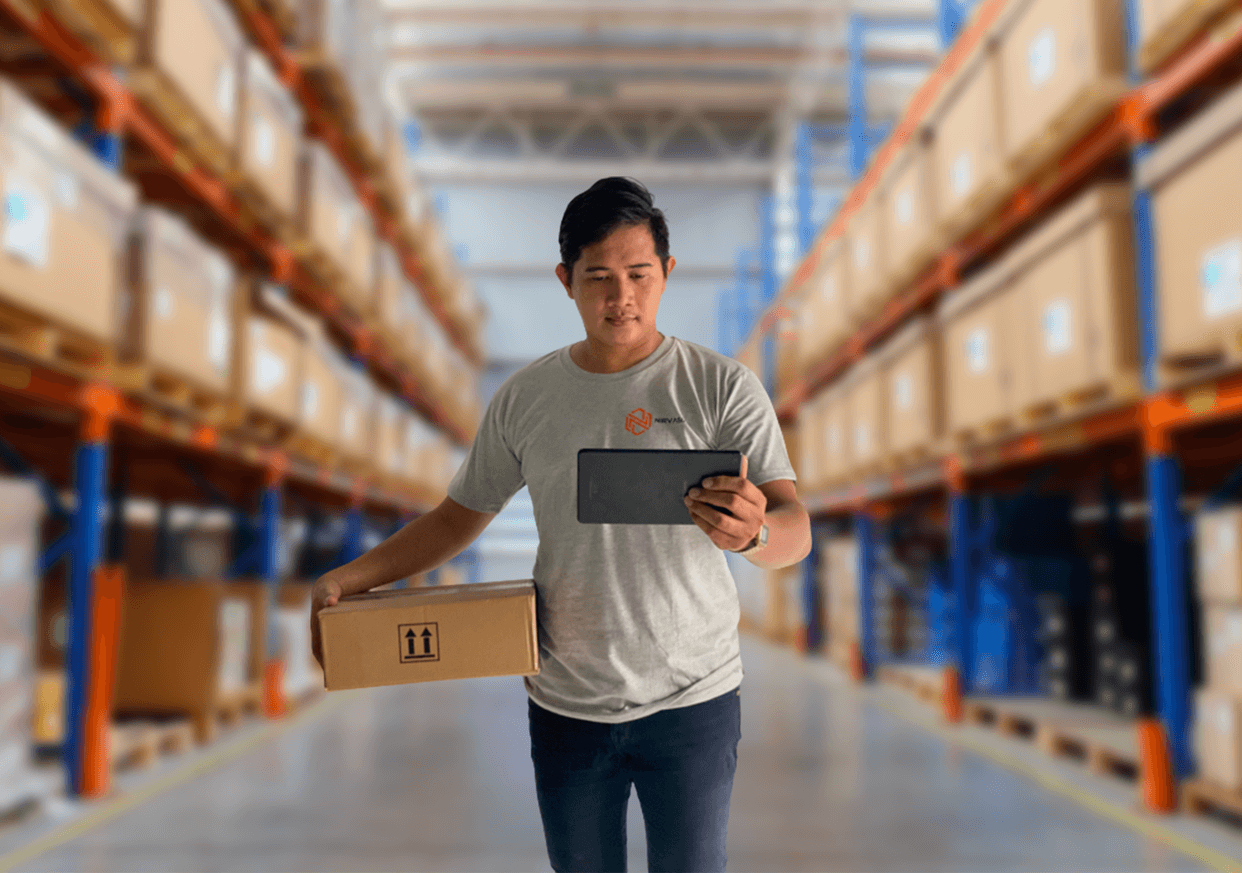
Short answer: A good fulfillment center in the Philippines should connect to all your sales channels, ship orders the same day, track every unit of stock, remit cash on delivery payments quickly and show you clear pricing with no lock-in. Compare providers on these points, ask for a sample monthly bill based on your real order numbers, and visit the warehouse if you can. Nirvasian is a fulfillment center in the Philippines that covers all of these for local and foreign ecommerce brands.
This guide explains what a fulfillment center does, how pricing works, the questions to ask before you sign and the warning signs to watch for.
What does a fulfillment center do?
A fulfillment center, also called a 3PL (third-party logistics provider), stores your products and ships your online orders for you. A typical setup works like this:
- You connect your online stores to the fulfillment center’s system.
- You send your stock to their warehouse. They count it, label it and put it on shelves.
- When a customer orders, the order flows to the warehouse automatically.
- Staff pick the items, pack them and hand the parcel to a courier.
- For cash on delivery orders, the courier collects payment and the money is remitted back to you.
- Returned parcels come back to the warehouse, get checked and go back into stock if they are in good condition.
Some providers add extra services such as importation, customs clearance, FDA product registration, kitting, gift wrapping, and B2B deliveries to retail stores.
When does it make sense to outsource fulfillment?
- Packing orders takes more of your time than growing the business.
- You fall behind on big sale days like 11.11 and 12.12, and your shop rating drops because of late shipments.
- You sell on several channels and keep overselling because stock counts do not match.
- You are running out of space at home or in your office.
- You are a foreign brand and need a team on the ground in the Philippines.
How fulfillment pricing works in the Philippines
Prices vary a lot between providers, so it helps to understand the parts of the bill. Most fulfillment centers charge a mix of these fees:
| Fee | What it covers | How it is usually charged |
|---|---|---|
| Onboarding or setup | Account setup and store integration | One time, often free |
| Receiving | Unloading, counting and shelving your stock | Per carton, per pallet or per item |
| Storage | Space your products use in the warehouse | Per pallet, per shelf or bin, or per cubic meter, each month |
| Pick and pack | Picking items and packing each order | Per order, plus a small fee per extra item |
| Packaging materials | Boxes, pouches, bubble wrap, tape | Per order or at cost |
| Shipping | Courier delivery to the customer | Per parcel, by weight and destination |
| COD handling | Collecting and remitting cash on delivery payments | Percentage of the amount collected |
| Returns | Receiving, inspecting and restocking returns | Per returned parcel |
| Value-added services | Kitting, bundles, inserts, relabeling | Per unit or per hour |
The best way to compare is to ask each provider for a sample bill for one month, using your real numbers: how many orders, how many items per order, how many SKUs and how much stock you will keep. A low storage rate means little if the pick and pack fee is high, and the other way around.
12 questions to ask before you choose a fulfillment center
- Which sales channels do you connect with? Look for direct integration with Shopee, Lazada, TikTok Shop, Shopify and WooCommerce, so orders and stock sync without manual work.
- What is your daily cut-off time? Ask until what time an order can come in and still ship the same day.
- How do you handle sale days? Ask how they staff up for 9.9, 10.10, 11.11 and 12.12, and how many days it takes to clear the backlog.
- Which couriers do you use? Working with several couriers lets them pick the best one for each area and avoid delays when one courier is overloaded.
- How fast is COD remitted? Ask how many days after delivery you get paid and whether they can send funds to a bank account outside the Philippines.
- Can I see my stock in real time? You should have a dashboard that shows stock levels, orders and returns, not a spreadsheet sent once a week.
- How do you keep inventory accurate? Ask about barcode scanning and regular cycle counts.
- Do you track batches and expiry dates? Essential for cosmetics, food supplements and anything with a shelf life. Ask if they pick by FEFO (first expired, first out).
- Do you have temperature-controlled storage? Important for beauty products, supplements and some food items in the Philippine heat.
- What happens to returns? Ask how quickly returns are checked and put back in stock, and what happens to damaged items.
- What are the contract terms? Check for lock-in periods, monthly minimums and the notice period to leave.
- Can you help with importation and FDA? If you bring products in from abroad or sell regulated products, one partner for import, FDA and fulfillment saves time and avoids mistakes.
Red flags to watch for
- No live inventory dashboard or order tracking
- A price list that leaves out receiving, packaging or returns fees
- Long lock-in contracts or high monthly minimums for a new brand
- Only one courier option
- No clear process for damaged, lost or returned items
- Slow or unclear COD remittance terms
- They will not let you visit the warehouse
Where should your fulfillment center be?
For most brands, a warehouse in or near Metro Manila is the practical choice. Most courier networks are built around Luzon hubs, so parcels to Metro Manila and nearby provinces arrive fastest, and the major ports for imported stock are close by. Orders to the Visayas and Mindanao still ship nationwide through the same couriers, with longer delivery times.
Fulfillment for foreign brands selling into the Philippines
Brands based outside the Philippines often need more than a warehouse. They need someone to receive and clear imported shipments, handle FDA requirements for regulated products, collect COD payments and send the money abroad. When choosing a partner, check that they can cover the full chain, from the port to the customer’s door.
Nirvasian does all of this under its own licenses. Foreign brands can import and sell in the Philippines through us without setting up a local company, and we take care of customs, import duties and taxes.
How Nirvasian works
Nirvasian has been running ecommerce fulfillment in the Philippines since 2019. Here is what you get:
- Integration with Shopee, Lazada, TikTok Shop, Shopify and WooCommerce, with stock synced in real time through our warehouse management system
- Same-day order processing and nationwide delivery through partner couriers such as J&T Express, Ninja Van and LBC
- Ambient and cold-chain storage, lot tracking and FIFO or FEFO picking
- Cash on delivery with remittance to bank accounts worldwide
- Returns management, kitting and B2B distribution to retailers
- Importation, customs clearance and FDA product registration under the same roof
- For foreign brands: importing and selling under our licenses, with duties and taxes handled
- No lock-in contracts, minimums or upfront fees to get started
See the details on our fulfillment services page. If you sell beauty products, read our guide on selling cosmetics in the Philippines.
Frequently asked questions
How much does a fulfillment center cost in the Philippines?
It depends on your order volume, the size of your products and how much stock you keep. Most providers charge separately for storage, pick and pack, packaging, shipping and COD handling. Ask for a sample monthly bill based on your real numbers to compare offers fairly.
Is a 3PL the same as a fulfillment center?
Mostly, yes. A 3PL is any company that handles logistics for you. A fulfillment center is a 3PL that focuses on storing stock and shipping online orders to consumers.
Can one fulfillment center handle Shopee, Lazada and my own website at the same time?
Yes, if it integrates with all of them. Stock is kept in one place and the count updates on every channel after each order.
Do you work with brands outside the Philippines?
Yes. We work with brands based abroad as well as local sellers. We import under our own licenses and handle customs, duties and taxes, FDA requirements, storage, fulfillment and COD remittance abroad.
How small can I start?
There is no minimum to start with Nirvasian. Many brands begin with a small first shipment and scale up after the first sales.
Get a quote
Tell us your products, your expected monthly orders and the channels you sell on, and we will send you a clear quote. Message us on WhatsApp at +63 919 080 5147, email info@nirvasian.com or use our contact form.